Monday, March 19, 2018
Family Matters
Is Cassius responsible for turning Brutus on to the idea of murdering Caesar, or was Brutus' personal issues and family legacy a more prominent contributing factor to Brutus' role in the murder?

Sunday, March 18, 2018
Oh How The Powerful Have Fallen
In episode 12 of the HBO series, "Rome", Julius Caesar's reign falls because he started taking power away from the republic and taking it for his own, and in turn gets stabbed to death by many men, including Brutus. In this scene from MockingJay Part 2, Katniss decides to kill President Coin instead of President Snow because she realizes that Coin's true intentions are for herself and not for the people like she had initially promised. Therefore, she is just as bad as President Snow.
https://www.youtube.com/watch?v=xPug6IJSKXs
https://www.youtube.com/watch?v=xPug6IJSKXs
Merciful or Power Move
After watching episode 12, Kalends of February, I was left wondering if Brutus delivered the fatal stab to Caesar to put him out of his misery or to gain power in Rome?


The Anatomy of a Murderer
Upon watching the two episodes of Rome, I was surprised by the continual following and showing of Brutus's actions leading up to his betrayal of Caesar. I felt as if I were viewing a personal journey of his towards becoming a 'hero' of Rome, and that the show itself was trying to make its audience contemplate his and his allies actions versus Caesar. Servilia, Brutus's mother, was eerily snakelike and I found her to be almost insane, especially in the antagonistic relationship between her and her son and her alliance with Pompey's son.
It was interesting to see how Rome's interpretation of Caesar's life and death differed and converged from the other sources we were given (journal articles and Plutarch's stories). I particularly enjoyed picking out the inclusion of Brutus working with Pompey despite his role in the death of his father, and the inclusion of other characters mentioned in Plutarch's lives of Antony and Brutus. The scene where Brutus begs for Caesar to believe his innocence against the writing of the posted letter directly referenced the words of Plutarch, who implied that even in battle, Caesar did everything possible to spare Brutus. I felt Caesar's love for his friend consistent and human, despite Brutus's turmoil over what side he should choose.
Overall, I thought the show was a great way to visualize the events leading up to Caesar's death, as well as showcase the anger and conviction of his murderers. It seems to beg the question of the price of power, and the price of choice (characterized through Brutus's indecision and fear).
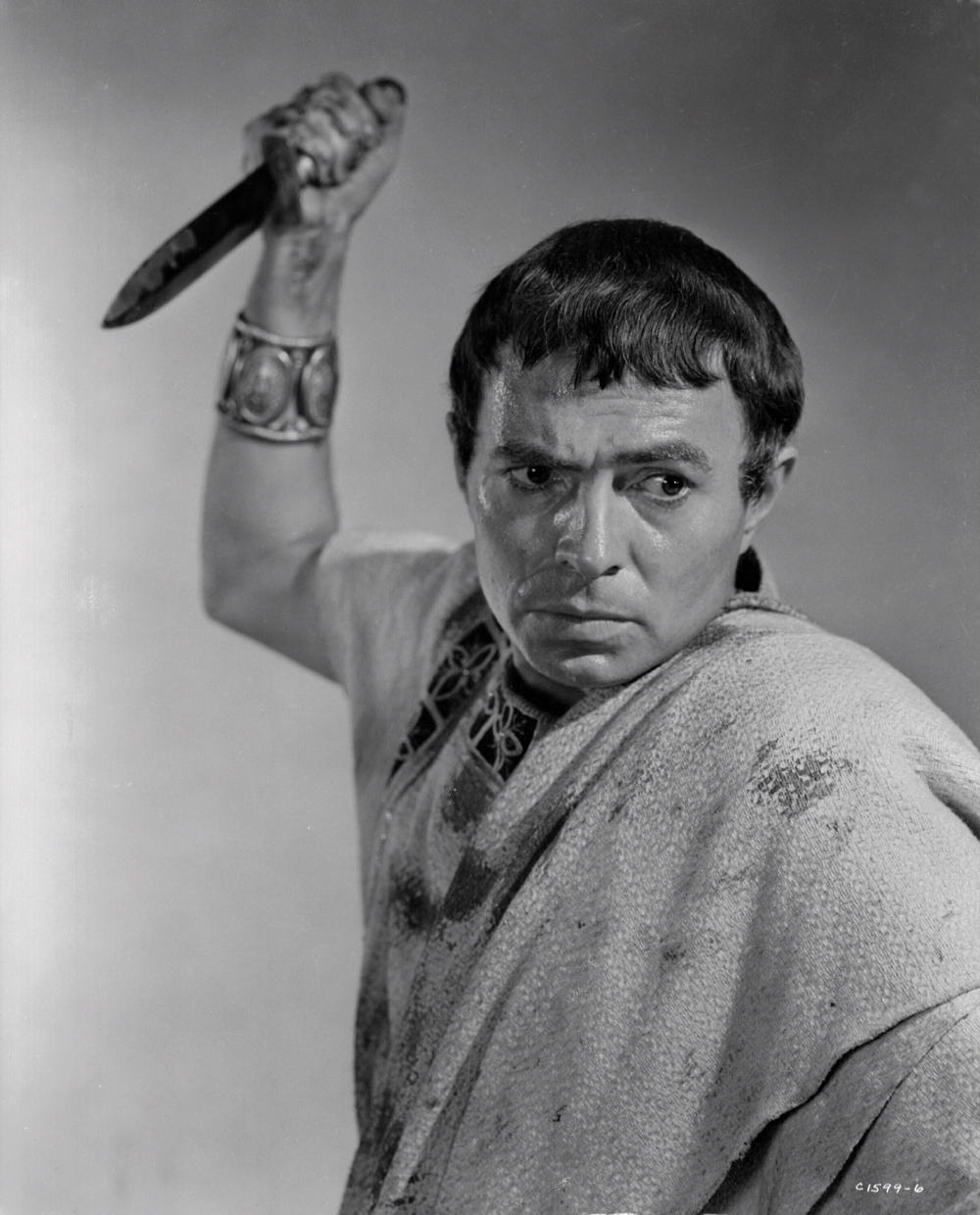 https://allhailtheblackmarket.com/wp-content/uploads/2017/03/070-james-mason-theredlist.jpg
It was interesting to see how Rome's interpretation of Caesar's life and death differed and converged from the other sources we were given (journal articles and Plutarch's stories). I particularly enjoyed picking out the inclusion of Brutus working with Pompey despite his role in the death of his father, and the inclusion of other characters mentioned in Plutarch's lives of Antony and Brutus. The scene where Brutus begs for Caesar to believe his innocence against the writing of the posted letter directly referenced the words of Plutarch, who implied that even in battle, Caesar did everything possible to spare Brutus. I felt Caesar's love for his friend consistent and human, despite Brutus's turmoil over what side he should choose.
Overall, I thought the show was a great way to visualize the events leading up to Caesar's death, as well as showcase the anger and conviction of his murderers. It seems to beg the question of the price of power, and the price of choice (characterized through Brutus's indecision and fear).
Caesar's Death scene

https://www.hbo.com/rome/season-01/12-kalends-of-february
The betrayal of Caesar scene being acted out made it seem more plausible than reading it in an ancient text. It was interesting how Brutus and Antony were portrayed. They both had more emotion than what was mentioned by Plutarch. Brutus dropping the knife hinted at a sense of guilt at betraying Caesar. It really seemed like he was not going to take part in the murder which would have contradicted every record of the event. Instead he got the knife back in his hand and gave the final blow. It did not kill Caesar and Caesar did not deliver his famous lines. Caesars slow death was weird in that it made him into a mortal human being rather than an all powerful dictator/tyrant that would ruin everyone's lives.
Plutarch only mentioned Marc Antony being distracted by someone while the betrayal was happening but there were a couple of people distracted. Vorenus was taken out of the picture before entering the building and then as the chaos was unfolding Posca was clubbed in the head. A lot happened and it all happened fairly according to plan. The realism was further enhanced when one of the betrayers fell to the ground, succumbing to his wounds from friendly fire, as Caesar was still being stabbed. Plutarch mentioned something similar in his text.
The way the plan was enacted looked more sloppy than it sounded like it should have gone. The guy who grabbed at Caesar first did not stab him and had to yell “Now” a bunch of times. There was a lot of hesitation from everyone involved because no one wanted to be the first one. That sort of hesitation happens nowadays but with less betrayal and blood. It was weird that even though this significant event was happening nobody knew about it except the ones doing the murdering and to everyone else it was just another day, as can be seen when comparing what was happening to Caesar with Vorenus’ and Pullo’s side stories.
Friday, March 16, 2018
The Humanity of Caesar
Watching Episode 12 of "Rome," helped to change my perspective on some of the things we have been reading and talking about. The scene where Caesar was being stabbed was particularly eye opening. Being able to see how he reacted helped me to better understand the human aspects of Caesar. Many times Caesar is made out to be this larger-than-life figure who has basically been made immortal by TV, books, movies, etc. Being able to actually see this scene played out rather than just reading or talking about it helped to exemplify that Caesar was a mortal human just like the rest of us. I think that a lot of these historical figures we talk about no longer seem capable of emotions and feelings because they have been so manipulated throughout time. However, in this scene we get to see not only the human aspects of Caesar but of Brutus as well.
When the camera zooms into Brutus’s face, it is clear to see the pain, fear, and uncertainty that he is feeling. The way this was shot was particularly interesting because I wasn't completely sure whether Brutus was crying or profusely sweating, which may have been the director’s intention: leaving the interpretation up to the viewer. When Cicero comes up behind Brutus and urges him to stab Caesar, the blood that covers Cicero really just solidifies the whole scene. I feel as though so many times we all know that Caesar was stabbed but we never think about how messy and painful stabbing can be. Stabbing is a very personal affair. You are the one physically taking the weapon and thrusting it into someone else’s body. It is also a slow way to die, and I think that the director did a wonderful job of portraying the pain that Caesar would have felt as he was left there to bleed out and die. His face was full of so much confusion and horror. It really helped to make the whole human nature of Caesar come to the forefront and that is something that I feel we rarely get to see.


Thursday, March 15, 2018
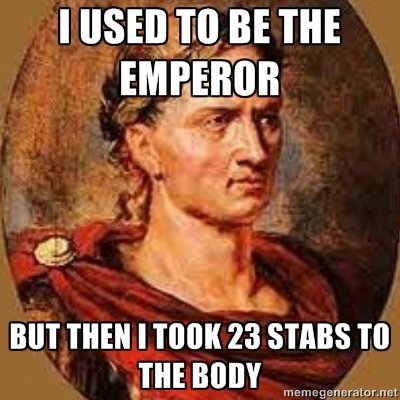
Happy Ides of March, y'all
Found this online and couldn't help but share it here, just for giggles.
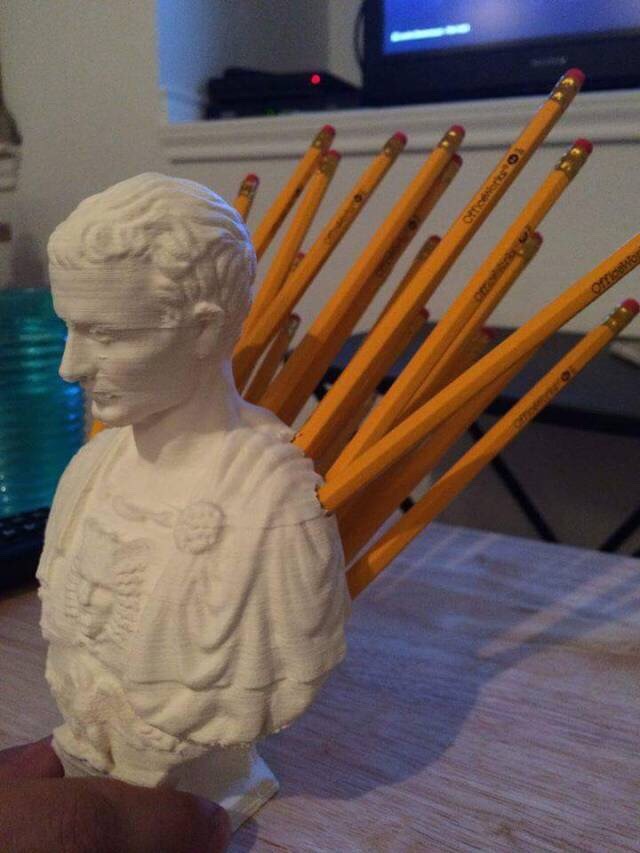
I think I could craft one of these out of clay. Whaddoya say, Doc?
Subscribe to:
Posts (Atom)